
What Does the Rahu Ketu Axis Mean for Traders
The supplied video explains Rahu and Ketu through twelve houses. It presents the axis as a symbolic lens for direction. Ketu represents familiar abilities and previously developed tendencies. Rahu represents unfamiliar territory demanding growth and conscious effort. For traders, each house becomes a mirror for behaviour and discipline.
Yeh article video ke ideas ko practical language mein explains karta hai. Every house is connected with one trading habit or risk. However, these associations belong to an astrological interpretive framework. They are not proven causes of market movements or profits. Use them for reflection, never for automatic trade decisions. The views and study presented in the video belong to Groww More. LogicIQ Pro Academy is not affiliated with those views and does not endorse them.
1. Understanding the Rahu Ketu Axis Clearly
The video begins with one important structural point. Rahu and Ketu always occupy opposite positions within this framework. Therefore, the interpretation describes tension between familiar patterns and future development. The axis is presented as movement, not a fixed judgement. A trader may recognize comfort on one side and effort elsewhere.
Simple words mein, Ketu shows what feels naturally familiar. Rahu highlights what may require deliberate practice and discomfort. This does not mean either point gives buy or sell signals. The video’s purpose is behavioural interpretation across twelve life areas. Market execution still requires data, planning, and independent risk controls.
2. How Traders Should Use This Video Responsibly
| Video Lens | Trading Reflection | Responsible Action |
| Rahu direction | Where growth may feel unfamiliar | Build skill through documented practice |
| Ketu comfort | Where habits may feel automatic | Question assumptions and review evidence |
| House theme | A behavioural area needing attention | Translate reflection into measurable rules |
| Market decision | A separate execution process | Use data, risk limits, and verification |
The most useful approach converts broad reflection into measurable behaviour. For example, emotional stability can become a pre-trade checklist. Discipline can become a fixed daily loss limit. Skill development can become regular backtesting and journal review. Astrology remains the reflection layer, while rules control execution.
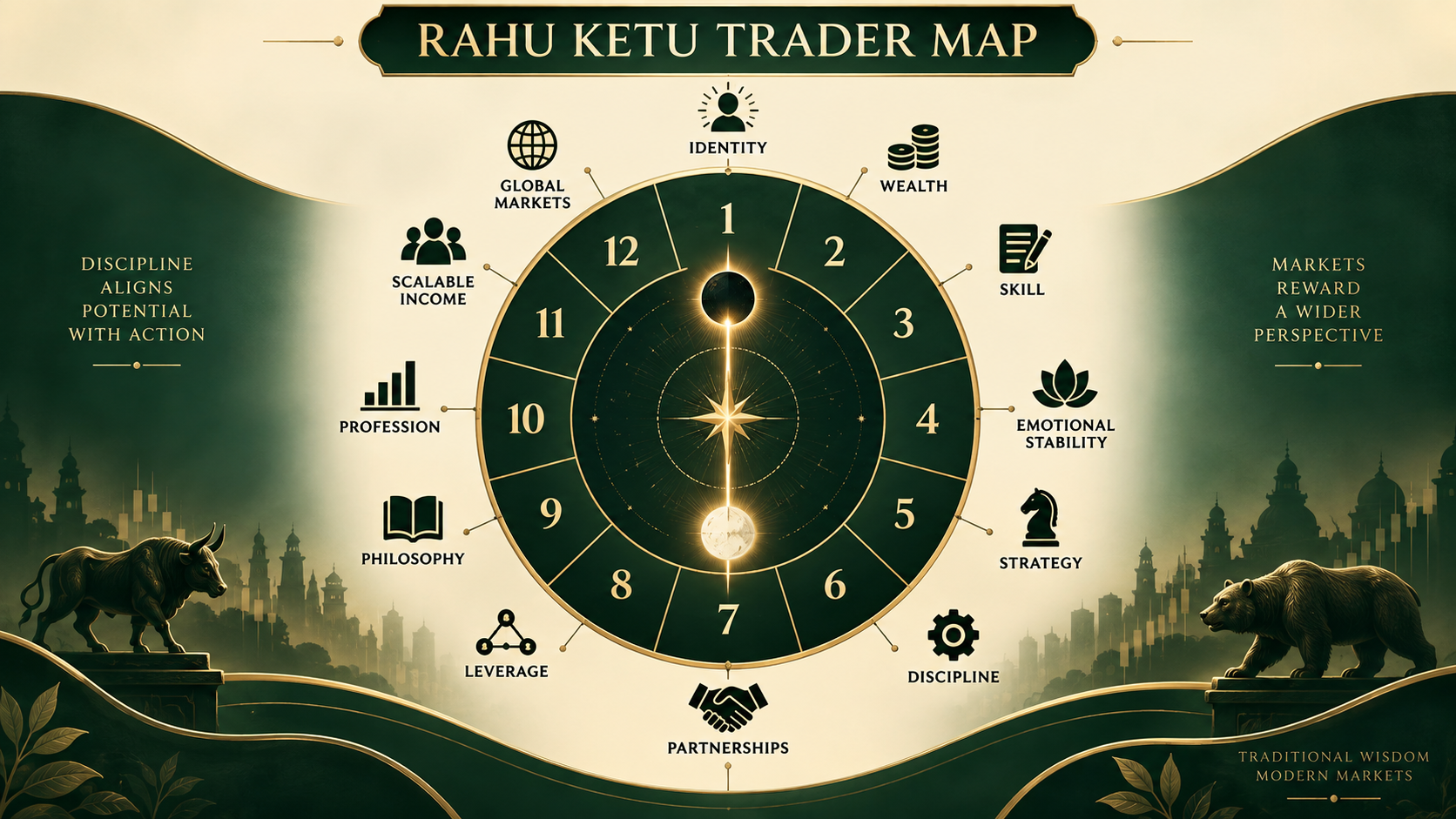
3. The Twelve Houses and Their Trading Lessons
First House Build Your Own Trading Identity
The video links the first house with self-made identity. Traders are encouraged to own their strategy instead of copying crowds. Dusron ke calls par dependency conviction ko weak bana sakti hai. A personal process should define setups, risk, exits, and reviews. Independent thinking still requires humility and evidence-based correction.
Second House Build Personal Financial Stability
The second house focuses on personal wealth and accumulated resources. The video contrasts personal savings with dependence on other people’s funds. Traders should grow their corpus steadily and treat windfalls cautiously. Core savings should never become casual speculative capital. Financial stability matters more than one exciting market opportunity.
Third House Replace Blind Belief with Skill
For the third house, the video emphasizes courage and practical effort. Beliefs should be tested against real market data and execution. Sirf confidence se repeatable trading edge create nahi hota. Traders need chart study, replay, backtesting, and honest recordkeeping. Hands-on learning helps expose weak assumptions before capital suffers.
Fourth House Master Emotional Stability
The fourth house is connected with emotional foundations and inner stability. The video suggests a calm mind becomes a major trading asset. Fear, frustration, and urgency can distort otherwise reasonable decisions. Traders should recognize emotional triggers before entering another position. Rest and routine can protect judgement during volatile sessions.
Fifth House Channel Speculation Through Rules
The fifth house is presented as the classic speculator’s axis. It may encourage strategy design, creativity, and strong market interest. However, the video makes strict rules central to that potential. Obsession without testing can quickly turn into reckless gambling. Creative ideas need fixed definitions, sample sizes, and controlled risk.
Sixth House Control Competition and Self Sabotage
The sixth house emphasizes competitive environments and daily discipline. According to the video, hidden losses and self-sabotage need attention. A daily stop can prevent one difficult session becoming disastrous. Revenge trading often appears after frustration overrides the original plan. Clear limits make discipline observable instead of merely motivational.
Seventh House Learn from Markets Without Depending on Calls
The seventh house shifts attention toward partnerships and wider participation. The market ecosystem can include mentors, communities, brokers, and counterparties. Learning from others is useful, but dependency creates vulnerability. Apni conviction verified rules se develop karna important hai. External opinions should never replace independent research and responsibility.
Eighth House Respect Leverage and Volatility
The eighth house addresses leverage, volatility, and shared financial exposure. The video says traders may operate here only after mastering risk. Leveraged products can multiply both profits and losses very quickly. SEBI also warns that derivatives can magnify losses substantially. Trading capital should remain separated from essential household savings.
Ninth House Develop a Long Term Trading Philosophy
The ninth house asks traders to zoom out and think broadly. Restlessness and overtrading are described as important traps. Fewer high-quality trades may suit a disciplined process better. Lekin trade frequency ka decision testing se aana chahiye. A philosophy becomes useful when supported by consistent operating rules.
Tenth House Treat Trading as Professional Work
The tenth house relates to career, reputation, and professional conduct. The video encourages a serious business-like approach toward trading. Professional behaviour includes preparation, records, controlled expenses, and scheduled reviews. Personal moods should not rewrite rules during market hours. Authority should emerge from responsibility, not loud performance claims.
Eleventh House Build Scalable and Repeatable Systems
The eleventh house focuses on networks and scalable income structures. The video also mentions advisory work within this broader theme. In India, regulated activities require appropriate registration and compliance. A repeatable system needs clear inputs, processes, outputs, and controls. Networking cannot substitute for accountability or lawful professional standards.
Twelfth House Explore Global Markets with Hard Limits
The twelfth house connects with broad reach and global markets. The video describes hard stops as an essential trading seatbelt. Global access also introduces currency, timing, liquidity, and regulatory risks. Hope-based holding can expand losses beyond the original plan. International opportunity therefore demands stronger research and measured exposure.
4. What the Trader Map Actually Teaches
Across all twelve houses, the repeated message concerns disciplined behaviour. Identity, savings, skills, emotions, leverage, and professional structure all matter. The video does not present planetary placements as live entry signals. Instead, it connects astrological themes with trader development. That distinction should remain clear throughout the article.
A chart placement cannot calculate position size or affordability. It cannot verify liquidity, brokerage, taxes, or slippage either. Those decisions require current market information and personal financial context. Isliye reflection ko execution ka replacement nahi banana chahiye. The final trade must stand on independently tested rules.
5. Convert Each Insight into a Measurable Trading Rule
| Behavioural Theme | Measurable Rule | Journal Evidence |
| Independent identity | Trade only documented personal setups | Setup name and checklist score |
| Emotional stability | Pause after predetermined emotional triggers | Mood and decision notes |
| Self-sabotage | Stop after the fixed daily loss limit | Daily loss and shutdown time |
| Leverage control | Set maximum rupee risk before entry | Quantity and planned loss |
| Long-term philosophy | Review performance on a fixed schedule | Monthly statistics and lessons |
Measurable rules reduce vague interpretation and hindsight bias. The trader decides each rule before the market creates pressure. After execution, the journal records whether the rule was followed. Results and process quality should be reviewed separately. A profitable rule-break remains dangerous despite its temporary outcome.
6. Risk Management Matters More Than Any Placement
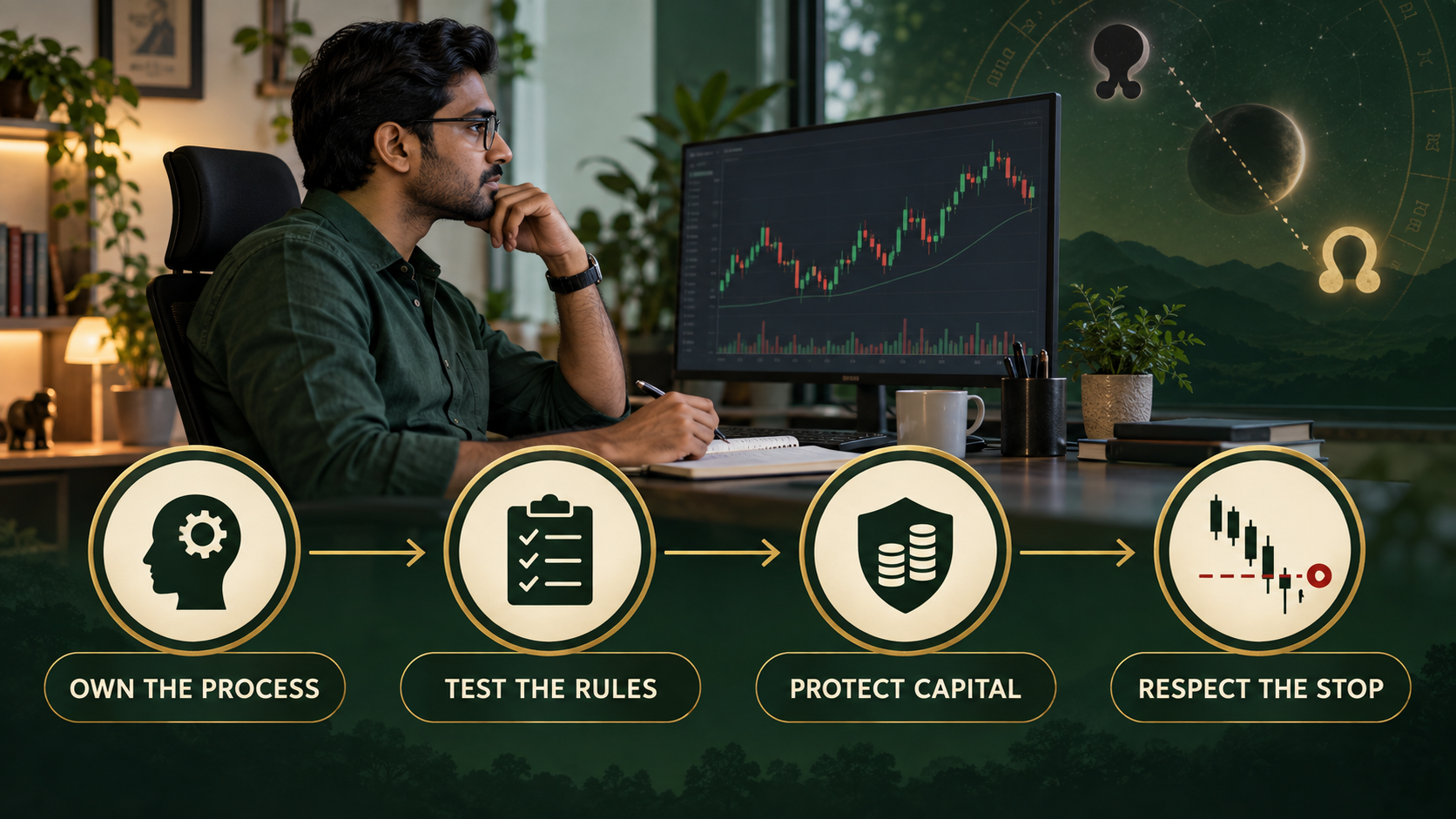
SEBI guidance asks investors to understand goals and risk appetite. It also explains market, liquidity, volatility, and currency risks. Derivatives add leverage, which can multiply gains and losses. Therefore, no astrological idea should override affordability or product understanding. Capital protection begins before an order reaches the market.
A trader should define maximum rupee risk for each position. Total daily exposure and correlated positions also need limits. Stop placement must follow a tested method, not discomfort alone. Borrowed money should not fund speculative trading. When conditions become unclear, staying outside remains a valid decision.
7. Why a Trading Journal Strengthens Self Awareness
A journal turns behavioural observations into reviewable evidence. Record the setup, entry reason, risk, exit, costs, and emotions. Also note whether outside opinions influenced the decision. Over time, patterns may reveal copying, overtrading, or stop movement. Yeh evidence self-awareness ko practical improvement mein convert karta hai.
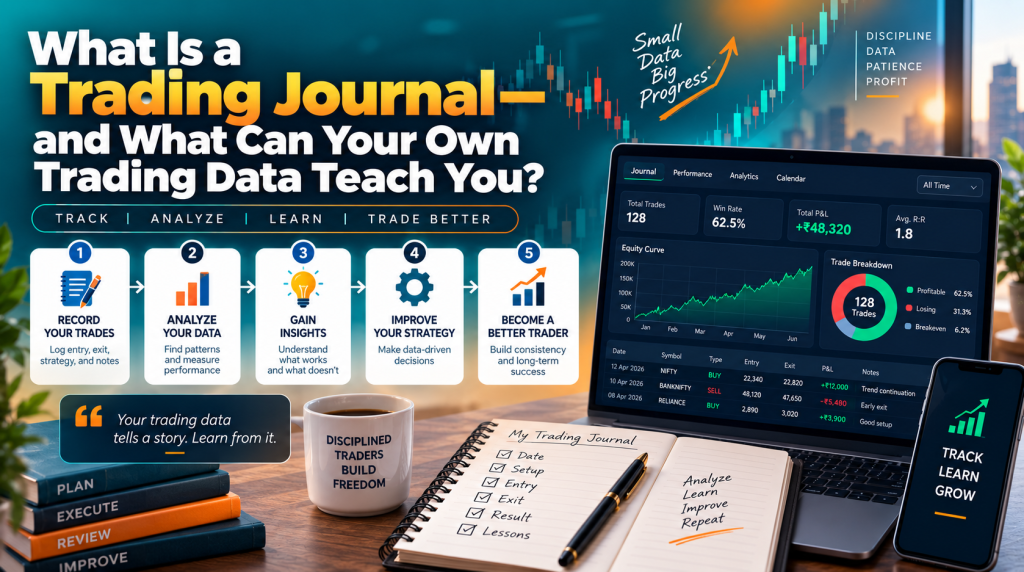
For a detailed workflow, read What Is a Trading Journal and Why Every Trader Needs One. It explains how structured records support disciplined review and learning.
8. Common Misunderstandings to Avoid
First, the video does not promise profits from any house. Second, it does not provide personalised investment recommendations. Third, the twelve-house map cannot replace market analysis. A placement should never excuse impulsive leverage or ignored stops. Interpretive language must remain separate from verified financial facts.
Another mistake involves treating broad descriptions as guaranteed personality labels. Human behaviour changes through experience, environment, and deliberate practice. Traders may recognize several themes at different times. Use useful questions without forcing every statement to fit. The goal is disciplined reflection, not absolute certainty.
9. A Practical Pre Trade Checklist
| Check | Question Before Entry |
| Setup | Does this trade match my written strategy? |
| Evidence | What data supports this decision today? |
| Risk | What is the maximum planned rupee loss? |
| Capital | Is this money separate from essential savings? |
| Emotion | Am I calm, focused, and free from revenge? |
| Exit | Where will I exit if the idea fails? |
This checklist applies regardless of anyone’s astrological interpretation. It creates a pause between impulse and market exposure. Answers should be written before execution, not reconstructed afterwards. If one critical answer remains unclear, skip the trade. Discipline often appears through decisions not to participate.
10. Guidance for Beginners in India
Beginners should learn products, order types, costs, and regulations first. Paper trading can help test process without immediate capital exposure. Start with simpler instruments before considering complex leveraged products. Verify intermediaries and avoid guaranteed-return promotions or anonymous tips. Education should strengthen independence, not create another dependency.
New learners can review How to Open a Demat Account in India in 2026 before selecting a broker or depository participant.
Explore more market education on the LogicIQ Pro Academy website.
11. Frequently Asked Questions
Does Rahu or Ketu predict the next market move
The supplied video does not provide a live prediction method. It uses the axis as a behavioural and directional metaphor. Market decisions still require independent evidence and risk management.
Which house is best for traders
The video assigns a different lesson to every house. It does not rank one placement as universally best. Discipline and tested rules remain necessary across all interpretations.
Can the fifth house guarantee speculative success
No. The video connects it with strategy and speculation themes. It specifically emphasizes strict rules rather than reckless gambling. No placement can guarantee trading performance or profits.
Why does the eighth house require extra caution
The video’s eighth-house discussion emphasizes leverage and volatility. These features can increase both opportunity and potential loss. Capital separation and predetermined risk therefore become essential safeguards.
Should astrology replace technical or fundamental analysis
No. Astrology should not replace independently verified market analysis. The article treats it as an interpretive reflection framework. Execution requires evidence, costs, suitability, and disciplined risk controls.
Is this article investment or trading advice
No. This article explains the supplied video for education only. It does not recommend any security, position, entry, exit, target, or stop-loss. Readers should consult a SEBI-registered professional before any financial decision.
Conclusion
The video presents the Rahu-Ketu axis as a trader-development map. Its twelve houses highlight identity, savings, skill, emotions, speculation, discipline, partnerships, leverage, philosophy, profession, scale, and global reach. These themes can create useful questions about behaviour. They do not establish guaranteed market outcomes or personal suitability.
Best takeaway simple hai: discipline writes the final result. Own your process, test every belief, and protect essential capital. Keep hard limits when volatility or leverage increases. Use astrological insights as a mirror, never as trade justification. Consistent evidence must guide every market decision.
| ⚠ IMPORTANT EDUCATIONAL DISCLAIMER | |
|
Official Sources Consulted
Supplied YouTube video: Rahu and Ketu in 12 Houses and What It Means for Traders
SEBI Investor: Key Risks in Investing in the Securities Market
SEBI Investor: Understanding Derivatives
SEBI Investor: How to Manage Investment Risks
SEBI Investor: Factors to Consider Before Investing